
Churches across Catalyst are noticing an increasing mix of internationals joining the church, either because they have come to a new saving faith in Jesus or because God is wonderfully at work stirring the nations together. Jonathan Durke from Hope Church in Worcester shares their experiences with us.
Before COVID-19 we were two congregations with one leadership team that met on Sunday mornings and Friday evenings. We gathered in a school auditorium but had recently bought a building. As lockdowns eased, our elders felt the Lord’s timing to occupy the newly refurbished Granary, but with a few changes. We were going to become one church with three congregations; but each congregation having its own core team.
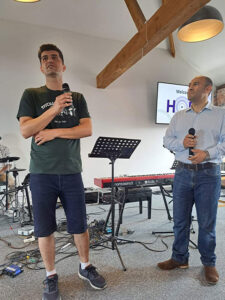
Along with this included the chance to recognise, raise and release new gifts, leaders, and influencers unique to our inter-dependant congregations. Into this context the congregation whose core team I lead began to experience a shift in our environment.
We’ve found ourselves on a journey of transition revolving around our cultural identities. Since occupying our building and starting up our new congregations we’ve seen a steady increase in people joining us from other countries. Places such as Nigeria, Uganda, South Africa and Iran. Two families have even come specifically in response to a call they sense the Lord has given revolving around a move of God in the UK.
Some live here in Worcester and have done so for many years, others were born in the UK and identify as British, and still others have recently travelled to Britain due to persecution. The common thread among them all though is that they have brought with them a native cultural identity into our predominant Western English context.
A hotel down the road from our building has kindly offered its entire complex to accommodate asylum seekers. Since doing so we had three Iranians visit us. We’ve had the privilege of baptising two of them the other month! The third, already being a Christian in an underground church and baptised, is emerging among us as someone with a potential leadership anointing and a growing desire to be used to reach his fellow Iranians and others at the hotel. Through them we’ve had an additional two Iranians coming along regularly and expressing a desire to be baptised.
I attended Catalyst’s Multiply Conference the other week and was inspired by hearing Tim Brown of Hope Community Church Birmingham share how the church he serves has transitioned in their diversity and inclusion of cultures around them. He spoke of how the church has worked to better integrate those of different nations among them. I managed to have a very brief conversation with him afterwards and was fascinated to hear him unpack this in a bit more detail. I was particularly struck by the model of evolving from a single dominant culture that does everything (mono-culture), to varied cultures being present (multi-cultural), to the true goal of an interdependence and integration of cultures where people of different heritages are equally participating and involved (inter-cultural).
Along this journey that God has sovereignly put us on (we weren’t necessarily pursing it to the degree that we’re now running with it) we’ve had to learn and adapt with growing humility. Our church is reshaping as a result of this, and the following are some of the practical actions we’ve taken to better facilitate our growing inter-cultural dynamics.
At our Sunday gatherings we’ve taken steps to try and be as culturally inclusive as possible.
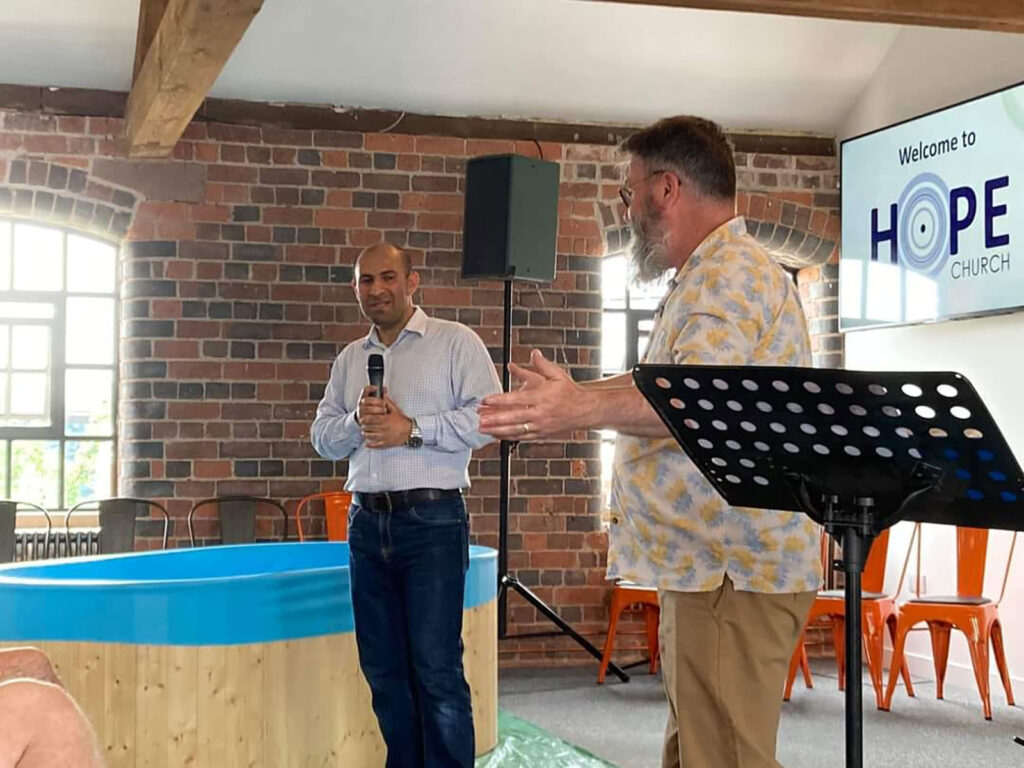
– We’ve redesigned our ‘Welcome to Hope Church’ logo that appears on our TVs to include the languages of those among us.
– I translate my sermons into Farsi, send it to an Iranian friend to check it over, and then email it to those still grappling with English. We’ve even taken one opportunity at a baptism when several Iranians were invited, to have the message translated there and then.
– When the Scriptures are read publicly we have the native language of the person reading as text on the TV behind them.
– We welcome people to read or pray publicly from the front in their ancestral language and ask them to read and pray again in English.
– Without excluding other Scriptures, we do have a focus on bible readings that speak of the nations, tribes, languages and people groups.
– When hosting, we’re being intentional on who we could invite to participate. How can we display our rich variety of cultures among us and so demonstrate the Gospel’s inclusive nature.
– When welcoming different nationalities, we’re learning how to greet them in their spoken language and with their body language; growing in our awareness of what might be culturally inappropriate or unhelpful for them.
– We’re hoping to figure out soon how to include Farsi text alongside our English worship songs on the screens. Outside our Sunday gatherings, we’ve also specifically invited different cultures to join us for certain meetings.
– We’ve recognised and are raising up a Nigerian man in his leadership potential and brought him onto our core team.
– We have an ‘Influencers Group’ made up of people in our ranks who have a growing investment and influence among the congregation, and this has seen the inclusion of several nationalities. In this environment space and input is given to pray into, prophesy over, and discuss aspects of the gathering from diverse voices.
– One of our Iranian guys came along to the Multiply Conference and we’ve since been praying into something being established through him to reach fellow Iranians.
We’re taking baby steps and learning as we go. Wanting to avoid any sense of tokenism from different nationalities, while also not neglecting those who are part of our existing culture. Not wanting to bypass gifting or character for the sake of “diversity ratios”. Yet wanting to demonstrate the Gospel and its unifying call to all cultures.

Jonathan is married to Ceri, and daddy to his two daughters, Elowen and Annie. He’s serves as an Elder and Congregation Leader at Hope Church .
