
As Catalyst, we believe it is important that we regularly survey our leadership cultures to ensure church remains a place people can find security, safety and care. Mike Saxton has recently started a new project for us, looking at healthy spiritual leadership and here he lets us know how he has been getting on.

Over the past few years there have been several high profile, and very sad, instances of senior Christian leaders misusing their leadership position in a way that causes harm to others due to their conduct. Probably the most high profile of these was the case of Mike Pilivachi, which has recently returned to our news cycles. These cases cause a great degree of hurt and pain to those impacted and bring dishonour to the church.
We can and must show our support, solidarity, care and compassion for those who have been impacted by abusive behaviour – and honour the courage it takes to come forward and report it. Recently Matt & Beth Redman released a video on YouTube called ‘Let there be light’ which bravely tells their story, and I’d encourage you to watch it.
However, the broader question is what lessons are there for us to learn: as a family of churches, as churches and as individual Christians. The starting point is our mindset. We must maintain a humble posture and ask the question: “Could this happen to us?” It is very natural to want to think the best of our leaders. But a refusal to ask this question can also be the biggest inhibitor to addressing unhealthy leadership practices. We need to find ways of honouring and valuing our leaders, whilst also having a strong framework in place that protects against wrong – and in extreme cases abusive – forms of leadership.
We strongly believe that God calls, equips and empowers leaders to lead. We’ve leaders throughout our movement who do an amazing job, and we honour and esteem them. However, we also need to recognise that a high view of leadership increases the potential for harm, as spiritual leadership is a very significant form of power. Some aspects of spiritual leadership and how power is exercised are specific to spiritual and religious contexts and as such when they go wrong can give rise to harmful or even abusive conduct. For example, depending on the individual involved, disapproval by God’s chosen leader can feel like disapproval from God; or if someone you believe is chosen by God asks you to do something that isn’t right it can be enormously difficult to resist that.
The Catalyst Strategy Team asked me to lead a task team to look at what lessons are there for us to learn and what changes to our culture, policies and approach we could make to mitigate against harm and create healthy, thriving churches.
What we’ve done
We started by consulting with a range of people, including people within our movement with expertise in psychology, counselling, theology, governance, legal, systems development and people management. We have also talked to some key people from other church movements to learn from what is being done more broadly.
This has led to three main workstreams : (1) the development of a policy for Catalyst and corresponding guidance to churches; (2) implementation and training to help churches introduce and integrate good practice; this will also look at the positive aspects of what we can do to cultivate healthy leadership culture; (3) pastoral and care systems to best support those who have been impacted by any form of abuse. We have also been working closely with Abi Flavell, and her team who are exploring the topic of men and women working together in healthy leadership teams, as elements of each of these projects are inter-connected.
All of these workstreams are underway. There is a draft policy and guidance document in place. We have also developed a theological framework for thinking biblically about the whole area. There is still some refinement needed before it is ready to be fully implemented. We also want to give time and space to consult widely too, which takes time as these issues are complex and they are sensitive.
Recently I felt God give me a picture of the body’s immune system. Our bodies are wonderful and extremely complex systems. One element we pay little attention to most of the time is our immune system. The immune system is a complex network of organs, cells and proteins that defends the body against infection, whilst protecting the body’s own cells. I felt God show me a picture that this work is like part of the immune system for His church.
We know the church has blemishes, wrinkles and stains – but Jesus is in the business of making her radiant. We’ve all our part to play in this process and please do pray for this:
“Christ loved the church and gave himself up for her to make her holy, cleansing her by the washing with water through the word, and to present her to himself as a radiant church, without stain or wrinkle or any other blemish, but holy and blameless.”
Ephesians 5:25-27
For further information about the project or to get more involved you can contact mike.saxton@catalystnetwork.org.If you have been impacted by any of the issues relating to this area, please do report it or raise a concern – in the first instance to the local church. If this route is not appropriate you can raise a concern to Catalyst by emailing safeguarding@catalystnetwork.org.
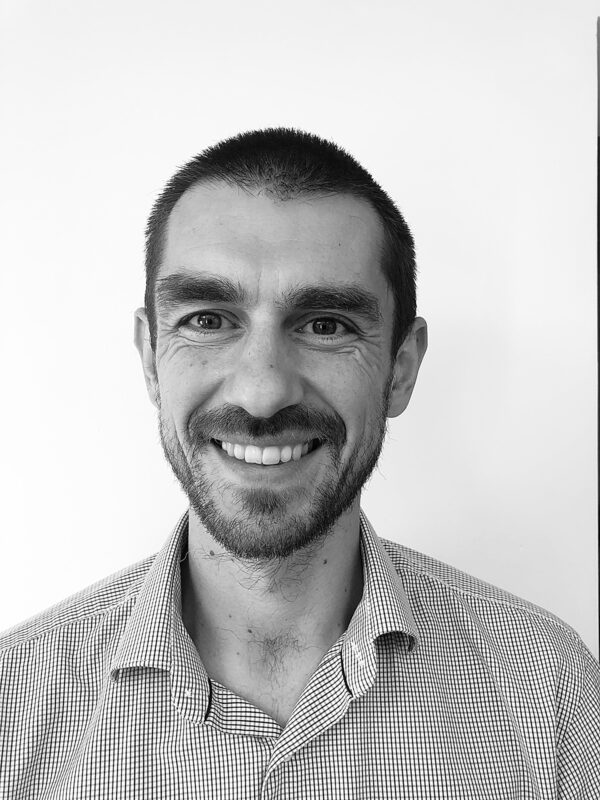
Mike Saxton is the Chair of Catalyst’s Board of Directors. Mike has held a range of leadership roles within the international development and climate sectors, across programming, finance and governance. Mike has spent time in the past living in Addis Ababa, Ethiopia. Mike is married to Esther and they have three teenage children.
